❧
Botanical Design

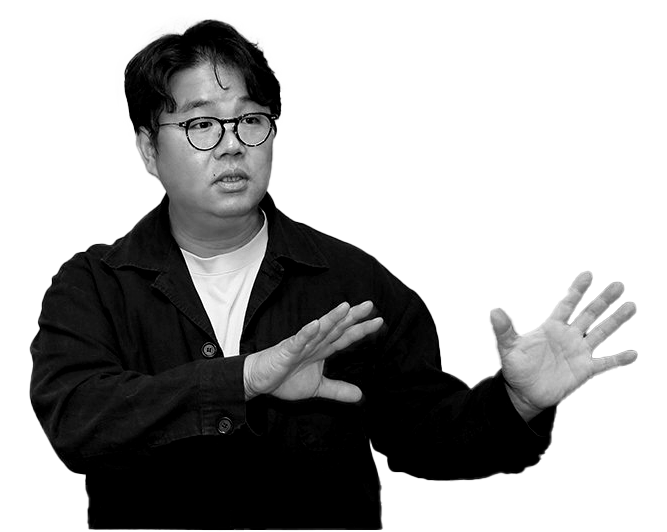
오주원 대표
CEO Joowon Oh
teal table은 식물을 통해 공간의 분위기와 감각을 설계하는 플랜트 디자인 스튜디오입니다. 2007년 설립 이후 주거, 상업, 오피스, 문화공간 등 다양한 영역에서 플랜테리어와 실내외 조경 프로젝트를 진행해왔으며, 공간의 성격에 맞는 식물 연출과 조경 디자인을 제안합니다. 성수 플래그십 스토어와 가드닝 프로그램 운영 경험을 바탕으로, 브랜드와 공간을 연결하는 식물 기반 솔루션을 지속적으로 선보이고 있습니다.
teal table is a plant design studio that shapes the atmosphere and sensory character of spaces through plants. Since its founding in 2007, the studio has led a wide range of interior planting and indoor-outdoor landscape projects across residential, commercial, office, and cultural spaces, offering plant styling and landscape design tailored to the distinct character of each environment. Building on the experience of operating its Seongsu flagship store and gardening programs, till table continues to present plant-based solutions that connect brands and spaces.
1. 틸테이블은 일반적인 조경 스튜디오와는 조금 다른 결을 가진 팀이라는 느낌이 있는데요.
어떤 방식으로 식물을 다루고 있는지 먼저 설명해 주실 수 있을까요?
teal table feels a little different from a typical landscape studio.
Could you first explain how you approach working with plants?
틸테이블이 일반적인 조경 스튜디오와 가장 다른 점은, 디자이너가 직접 식물을 보고 고르며 시공까지 깊이 관여한다는 점입니다.
이런 말을 들으면 “어, 누구나 그렇게 하는 것 아닌가?” 라는 질문을 하실 수도 있지만, 현실은 그렇지 않습니다.
실제로 많은 업체들이 현실과는 격차가 있는 화려한 3D 제안서의 비주얼에 집중을 하고 시공은 다른 팀들이, 그리고 식물관리는 또 다른 팀들이 진행합니다.
틸테이블은 제안서나 3D 이미지로 설득하는 것보다, 실제 공간의 환경에 맞는 수종을 찾고, 나무의 수형과 상태를 직접 보며 공간에 맞게 다듬는 과정이 더 중요하다고 생각합니다.
공간을 이해하고, 클라이언트의 니즈를 파악한 뒤, 그 안에서 식물이 어떤 역할을 해야 하는지부터 정합니다.
이후 식물이 잘 살 수 있도록 흙의 배합, 식재 방식, 전정과 수형 관리까지 세심하게 조율합니다.
보이지 않는 일이 많고 번거로운 과정이지만, 그 과정을 생략하지 않고 까다로운 현실과 타협하지 않는 것이 틸테이블의 방식입니다.
What sets teal table apart most from a typical landscape studio is that our designers personally inspect and select the plants, and stay deeply involved through the construction process.
You might hear that and think, “Isn’t that what everyone does?” But in reality, that is rarely the case.
In practice, many companies focus on producing visually striking 3D proposals that can feel quite far removed from actual conditions on site. Then one team handles the construction, while another takes care of plant maintenance.
At teal table, we believe that what matters more than persuading people with proposals or 3D images is finding the right species for the real conditions of a space, carefully observing the form and condition of each tree, and shaping it in a way that truly suits the site.
We begin by understanding the space and identifying the client’s needs, and from there, we first determine what role the plants should play within it.
After that, we carefully coordinate everything from soil composition and planting methods to pruning and form management so the plants can thrive.
Much of this work is invisible, and the process is often painstaking and demanding. But till table’s way is to never skip those steps or cut corners in response to practical constraints.
2. 작업을 보면 단순히 공간을 채운다기보다, 식물이 놓이는 “태도”를 설계하는 느낌이 드는데요.
틸테이블이 생각하는 식물의 역할은 무엇인가요?
Looking at your work, it feels as though you are not simply filling a space, but designing the “attitude” with which plants are placed within it.
What role do plants play in teal table’s philosophy?
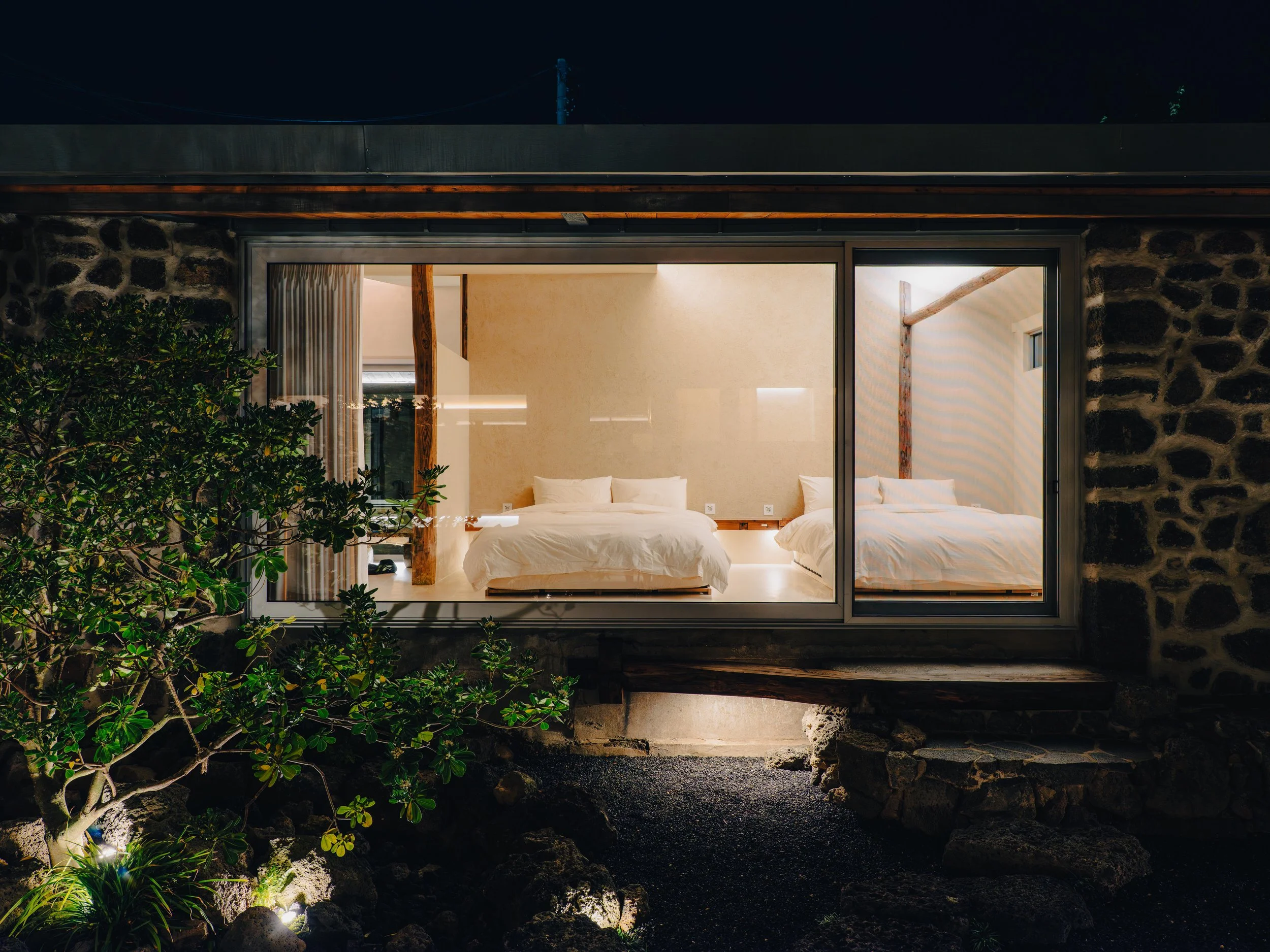
식물은 단순히 빈 공간을 채우는 장식물이 아니라, 공간과 공간을 부드럽게 이어주는 존재라고 생각합니다.
서로 성격이 다른 공간도 식물이 놓이면 자연스럽게 연결되고, 딱딱하거나 낯선 분위기도 조금 부드러워집니다.
중요한 것은 식물이 너무 앞서 나서지 않으면서도, 분명한 존재감을 갖는 것입니다.
채우는 것만큼 비우는 것도 중요하고, 전정과 전지, 배치를 통해 공간에 맞는 태도를 만들어주는 것이 식물의 역할이라고 생각합니다.
We do not see plants as mere decorative elements used to fill empty space. Rather, we see them as presences that gently connect one space to another.
Even spaces with very different characters can feel naturally linked once plants are introduced, and atmospheres that might otherwise feel rigid or unfamiliar become a little softer.
What matters is that the plants do not step forward too much, while still maintaining a clear presence.
Leaving space is just as important as filling it, and we believe the role of plants is to create the right attitude for a space through pruning, trimming, and placement.
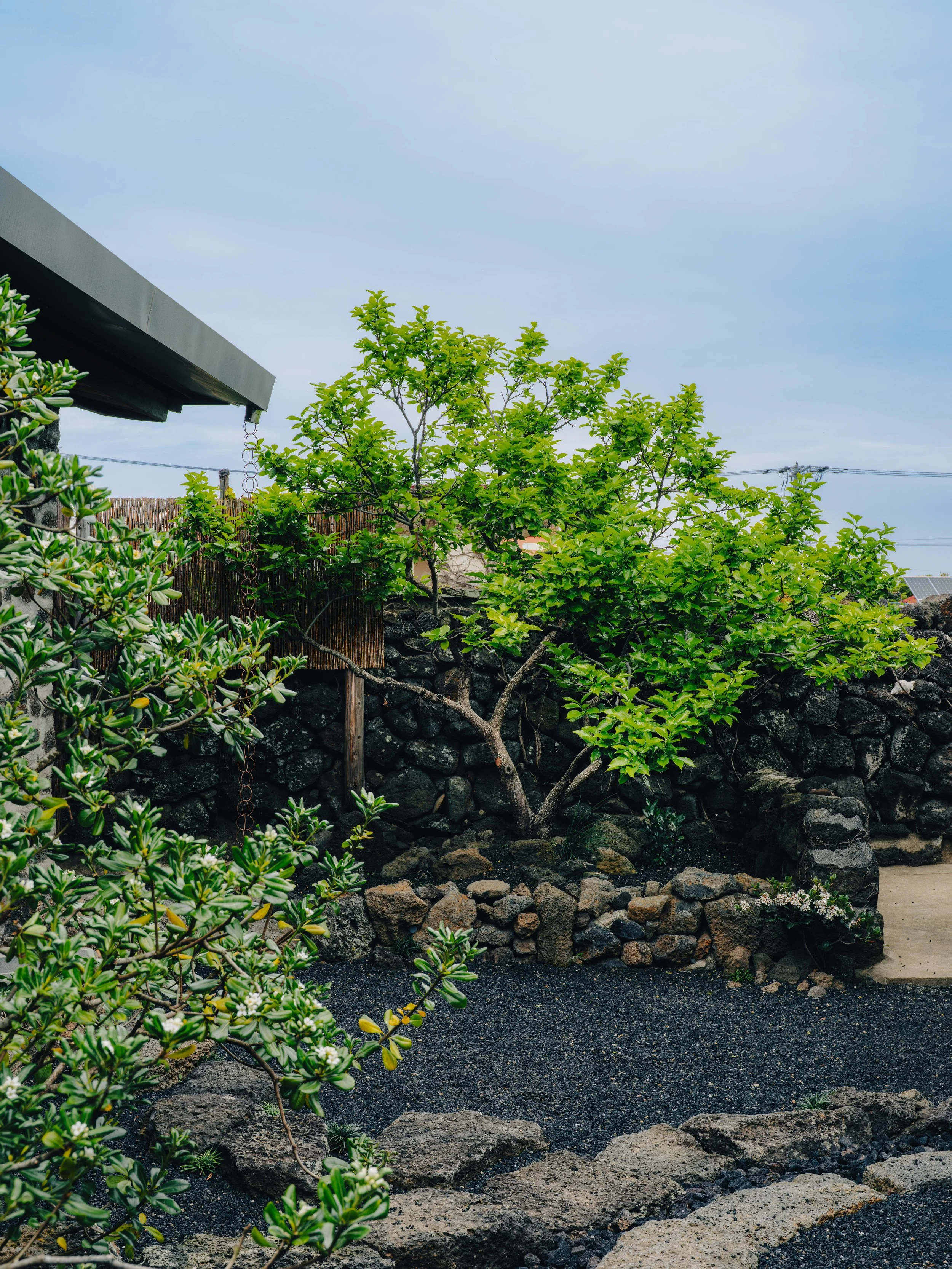
3. 처음 눗 애월 공간을 보셨을 때, 어떤 장면이 가장 먼저 들어오셨나요?
When you first saw the NUUT Aewol space, what was the first scene or element that caught your eye?
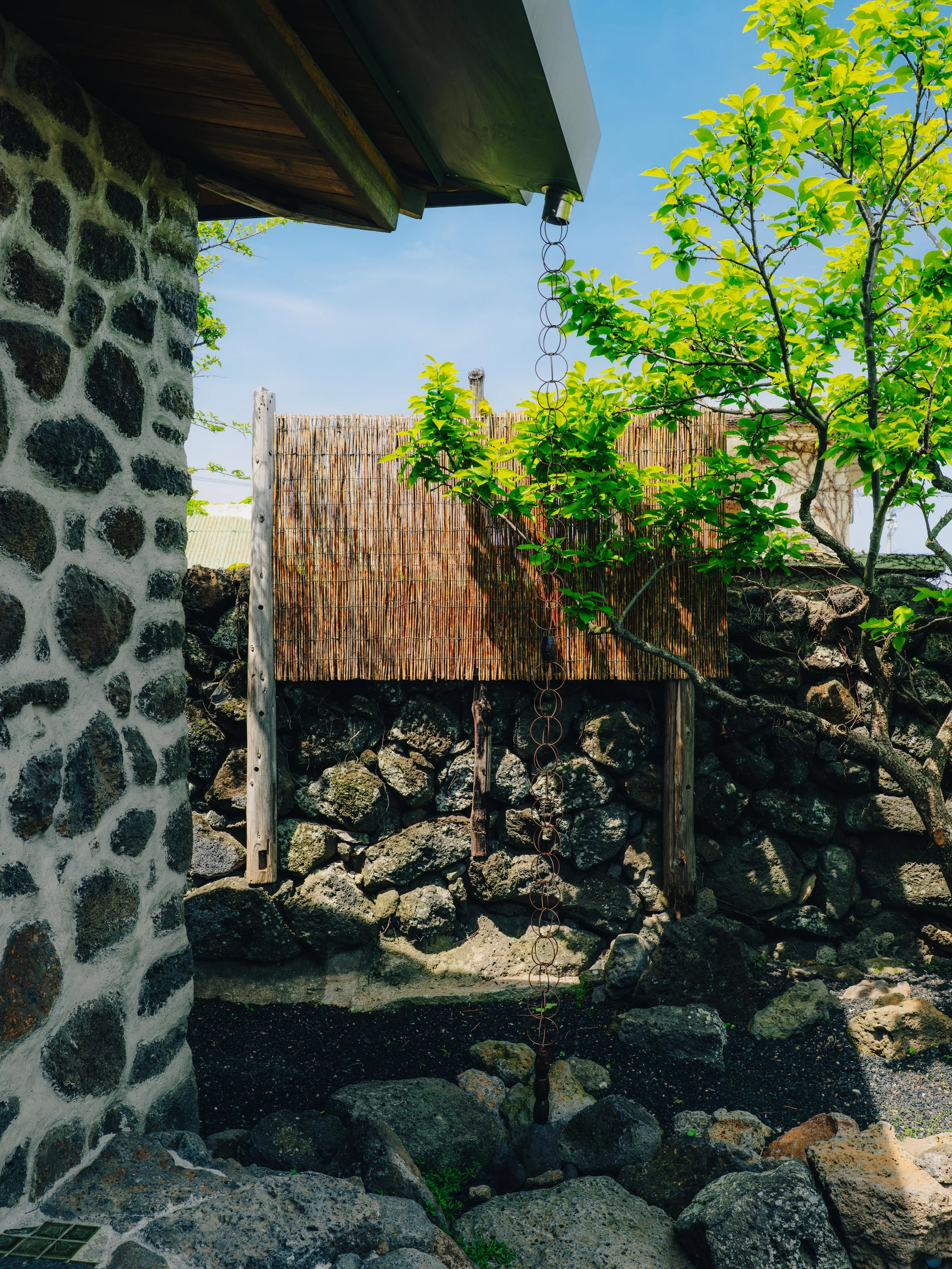
가장 먼저 제 눈에 들어온 것은 오래된 감나무였습니다.
식물을 다루는 사람으로서, 그 나무가 가진 시간과 분위기가 강하게 느껴졌습니다.
마치 이 공간의 터주대감처럼 오래 자리를 지키고 있는 나무였고, 눗 애월의 정서를 가장 먼저 말해주는 존재처럼 보였습니다.
The first thing that caught my eye was the old persimmon tree.
As someone who works with plants, I could strongly feel the sense of time and atmosphere it carried.
It felt like the quiet guardian of the site, a tree that had held its place there for a long time, almost as if it were the first presence to speak for the spirit of NUUT Aewol.

4. 이 공간은 ‘쉼’보다는 ‘몸의 리듬을 낮추는 체류’에 가깝다고 생각하는데,
이런 방향성이 식물 작업에도 영향을 주었나요?
This space feels less like a place for simple “rest” and more like a stay that gently slows the body’s rhythm.
Did that direction also influence your work with plants?
네, 매우 중요한 기준이었습니다.
눗 애월은 빠르게 소비되는 숙소라기보다, 잠시 세상과 거리를 두고 머무는 공간에 가깝다고 느꼈습니다.
외부 세상과는 자연스럽게 분리되어 아늑한 공간이며, TV가 없고, 하늘과 바람, 식물의 움직임에 자연스럽게 시선이 가는 공간이기 때문에 식물의 배치가 더욱 중요했습니다.
큰 나무의 흐름뿐 아니라 하부의 작은 식물, 잎의 질감, 바람에 흔들리는 모습과 나뭇잎이 부딪히며 내는 소리까지 신경 쓴 이유도 그 때문입니다.
머무는 동안 감각이 천천히 낮아질 수 있는 장면을 만들고 싶었습니다.
Yes, very much so. It was one of the most important guiding principles for the project.
NUUT Aewol felt less like a place designed for quick consumption and more like a space where one can step away from the world for a while and simply remain.
Because it naturally feels separate from the outside world — intimate, free of television, and a space where the eye is naturally drawn to the sky, the wind, and the movement of plants — the placement of the plants became even more important.
That is why I paid close attention not only to the flow of the larger trees, but also to the smaller understory plants, the texture of the leaves, the way they move in the wind, and even the sound of leaves brushing against one another.
I wanted to create scenes in which the senses could gradually quiet down over the course of the stay.
가장 중요한 기준은 ‘머무는 사람에게 포근하게 느껴지는가’였습니다.
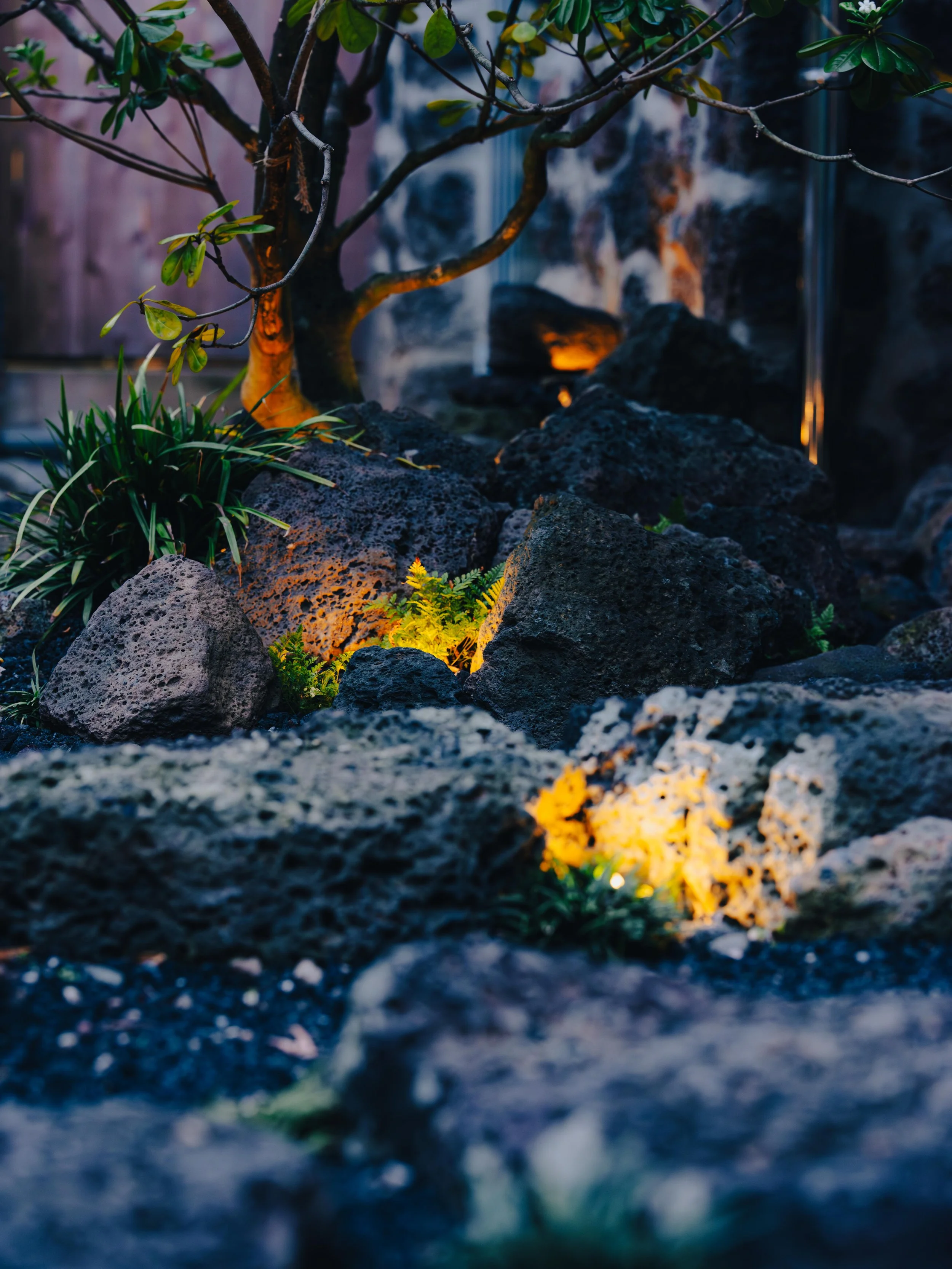
날카롭고 강한 인상의 식물보다는 부드러운 잎의 형태를 가진 수종을 중심으로 선택했고, 제주에서 느낄 수 있는 전통적인 식물과 공간에 어울리는 외지 수종을 함께 배치했습니다.
또한 바람이 불 때 잎이 내는 소리까지 고려했습니다.
대나무 숲에 가면 바람이 불 때 잎들이 부딪히며 내는 소리가 있습니다.
마음에 안정감을 주고 정신을 맑게 하는 그 소리를 흉내낼 수 있는 아카시아과 나무를 심었습니다.
대나무를 심을 수 있지만 번식력이 강해 공간을 해칠 수 있다.
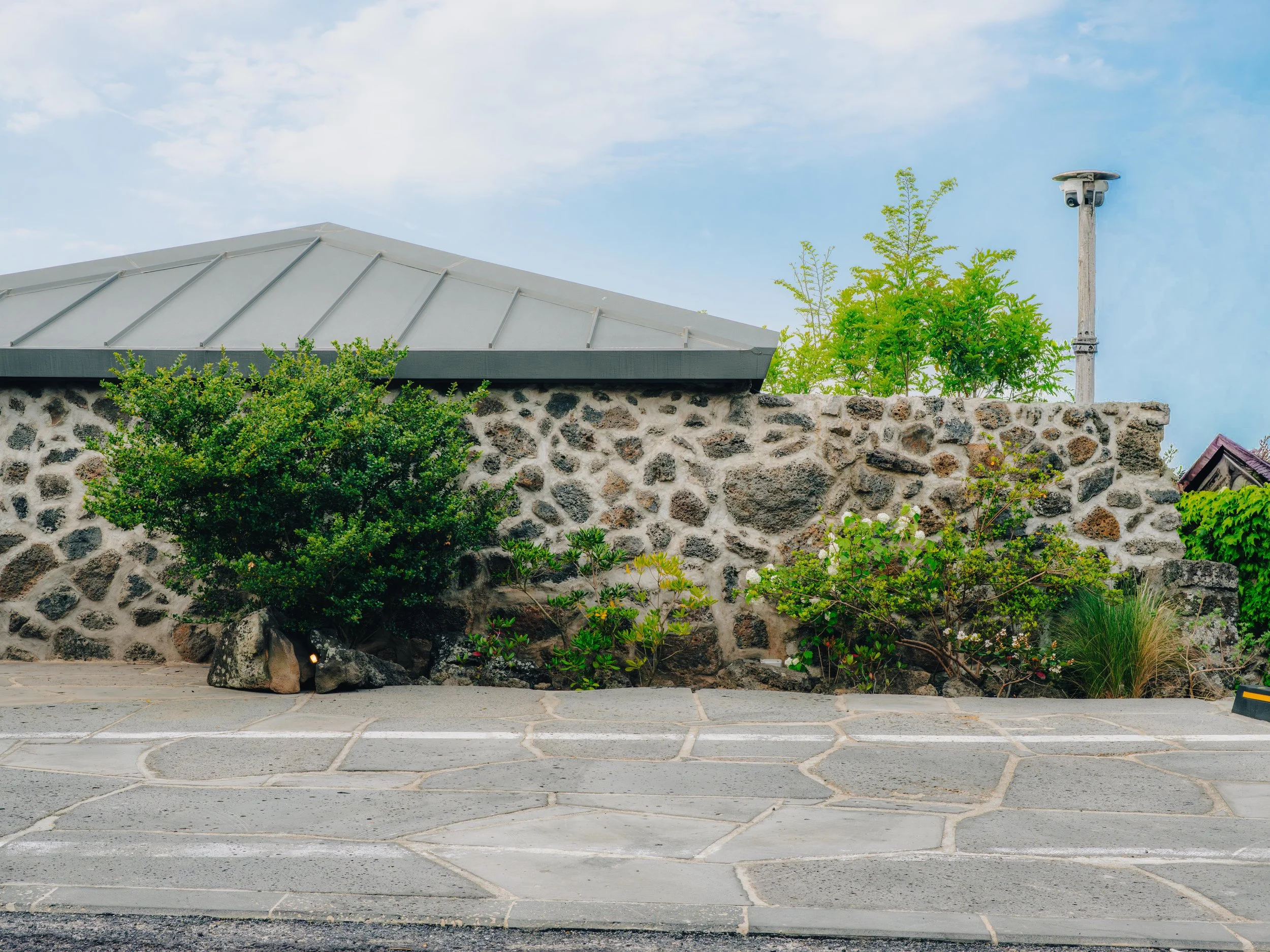
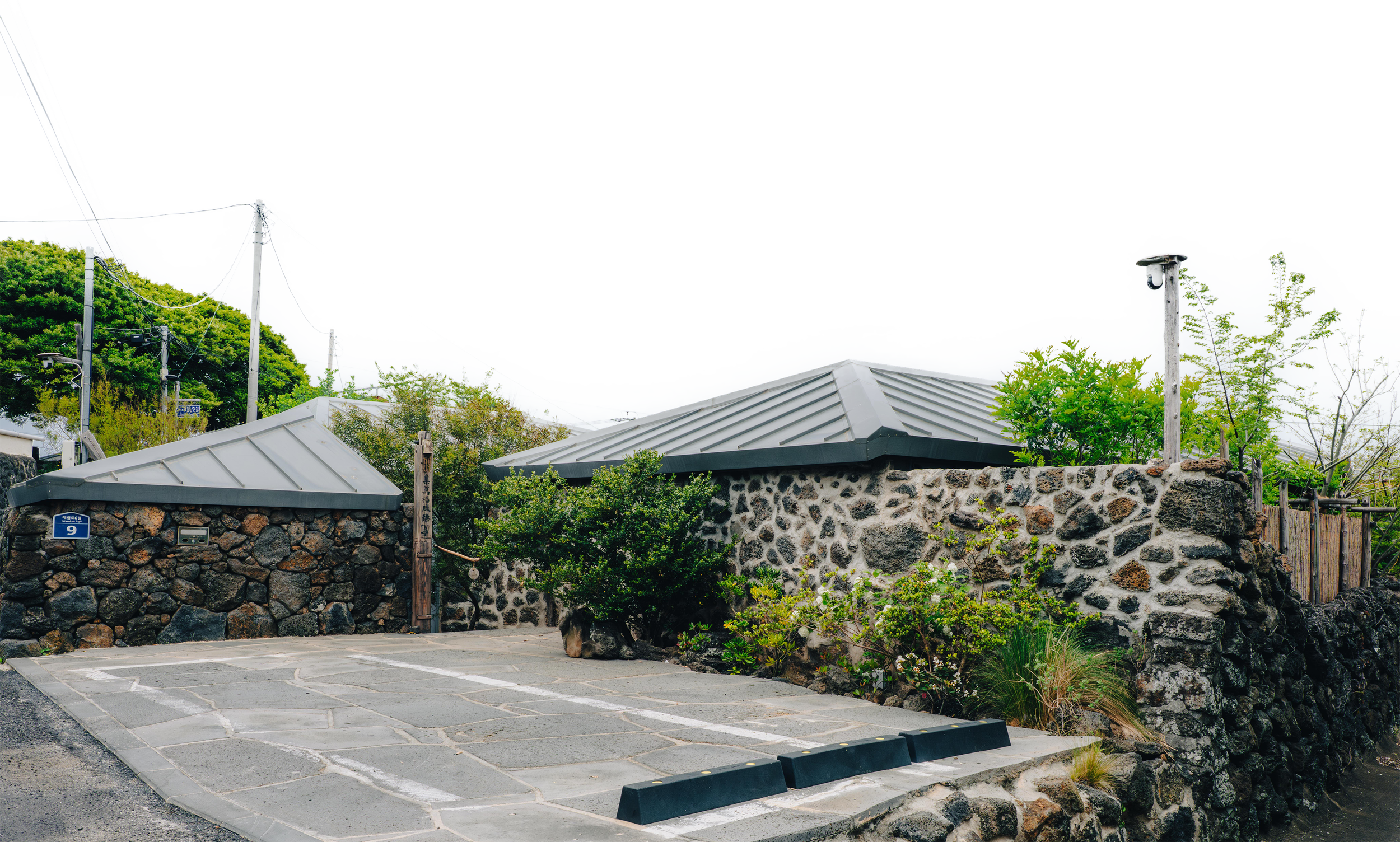
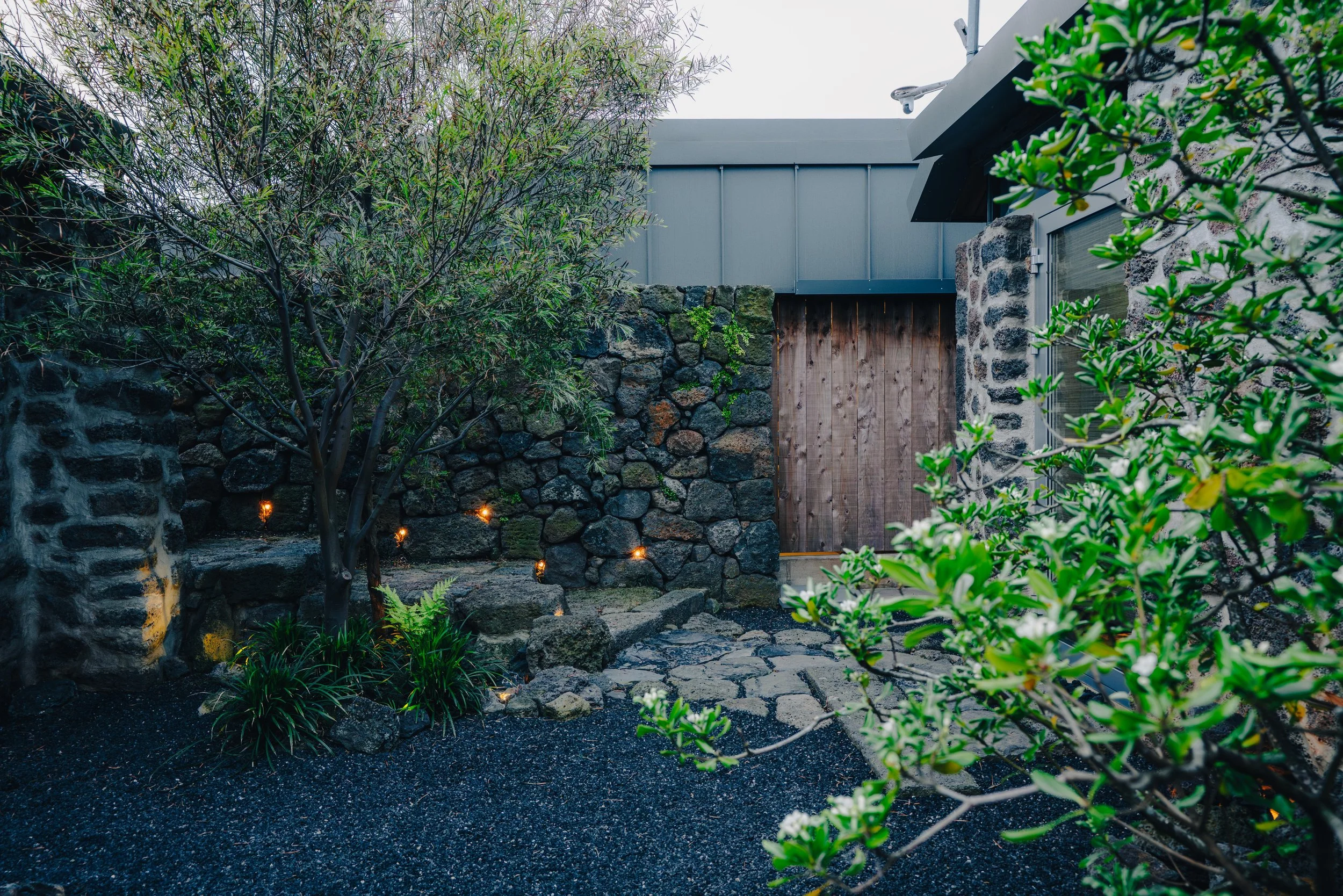
특히 자쿠지 주변의 야외 공간은 기존에 자리 잡고 있던 사철나무와 감나무를 최대한 살리는 방향으로 구성했습니다.
새로운 조경을 얹기보다는, 원래 있던 자연을 정리하고 드러내는 방식에 가까웠습니다.
The most important criterion was whether the space would feel warm and comforting to the people staying there.
Rather than choosing plants with sharp or overly strong impressions, I focused on species with softer leaf shapes. I also arranged a mix of plants that carry a traditionally Jeju-like feeling together with non-native species that still suited the character of the space.
I even considered the sound the leaves would make in the wind.
In a bamboo grove, there is a particular sound created when the leaves brush against one another in the breeze.
It brings calm and clears the mind, so I chose a tree from the acacia family that could create a similar effect.
Bamboo itself could have been planted, of course, but its aggressive spreading habit can easily disturb and damage a space.
Especially in the outdoor area around the jacuzzi, I tried to preserve the existing evergreen shrubs and persimmon tree as much as possible.
Rather than layering in an entirely new landscape, the work was closer to revealing and refining the nature that was already there.
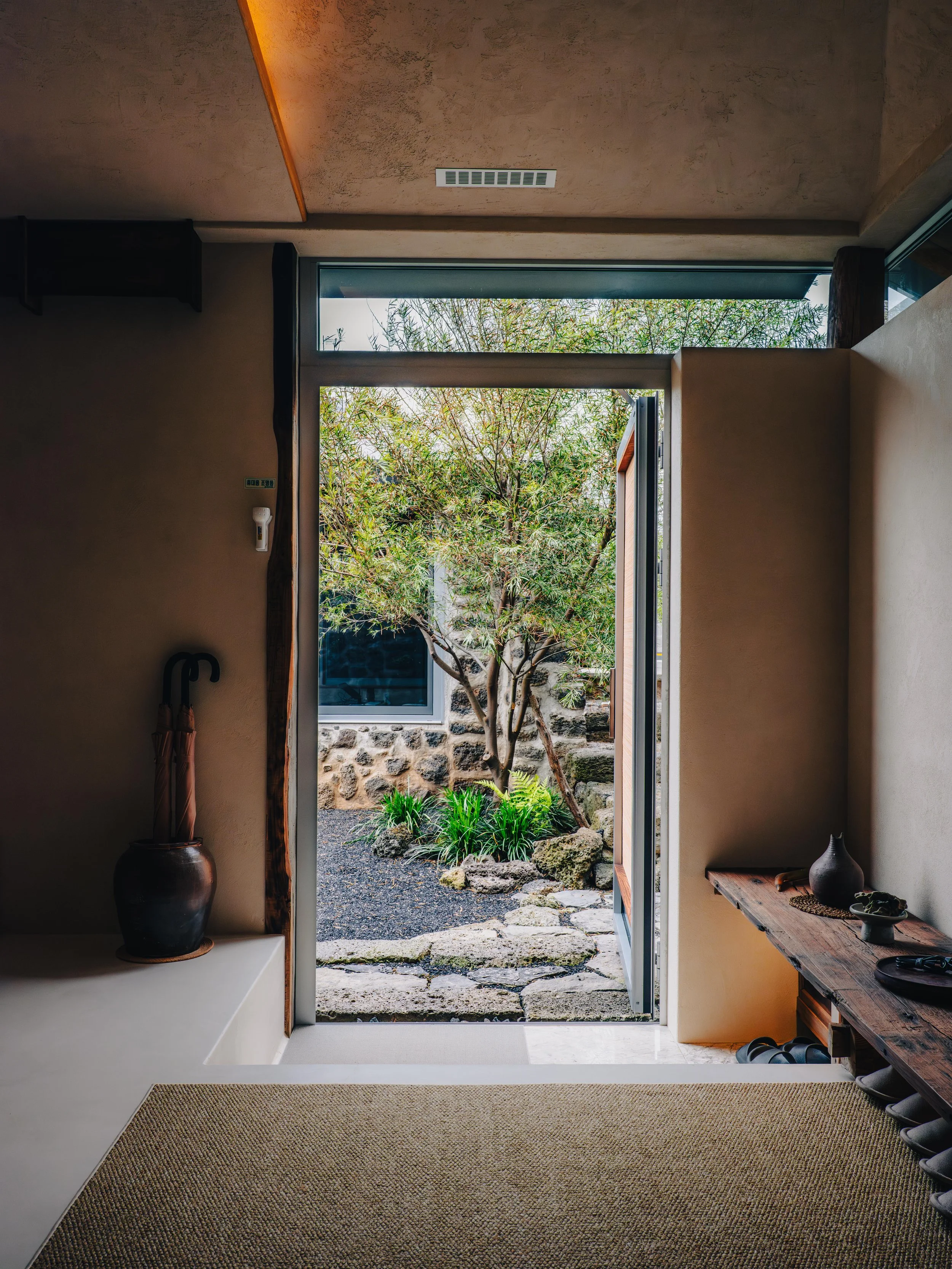
5. 일반적인 조경은 “어떻게 보이는가”에 집중한다면, 이번 작업은 “어떻게 머무르게 하는가”에 가까웠던 것 같습니다.
실제로 어떤 기준으로 식물을 배치하셨나요?
While conventional landscaping often focuses on “how a space looks,” this project seems to have been more about “how it allows people to dwell.”
What criteria did you actually use when arranging the plants?
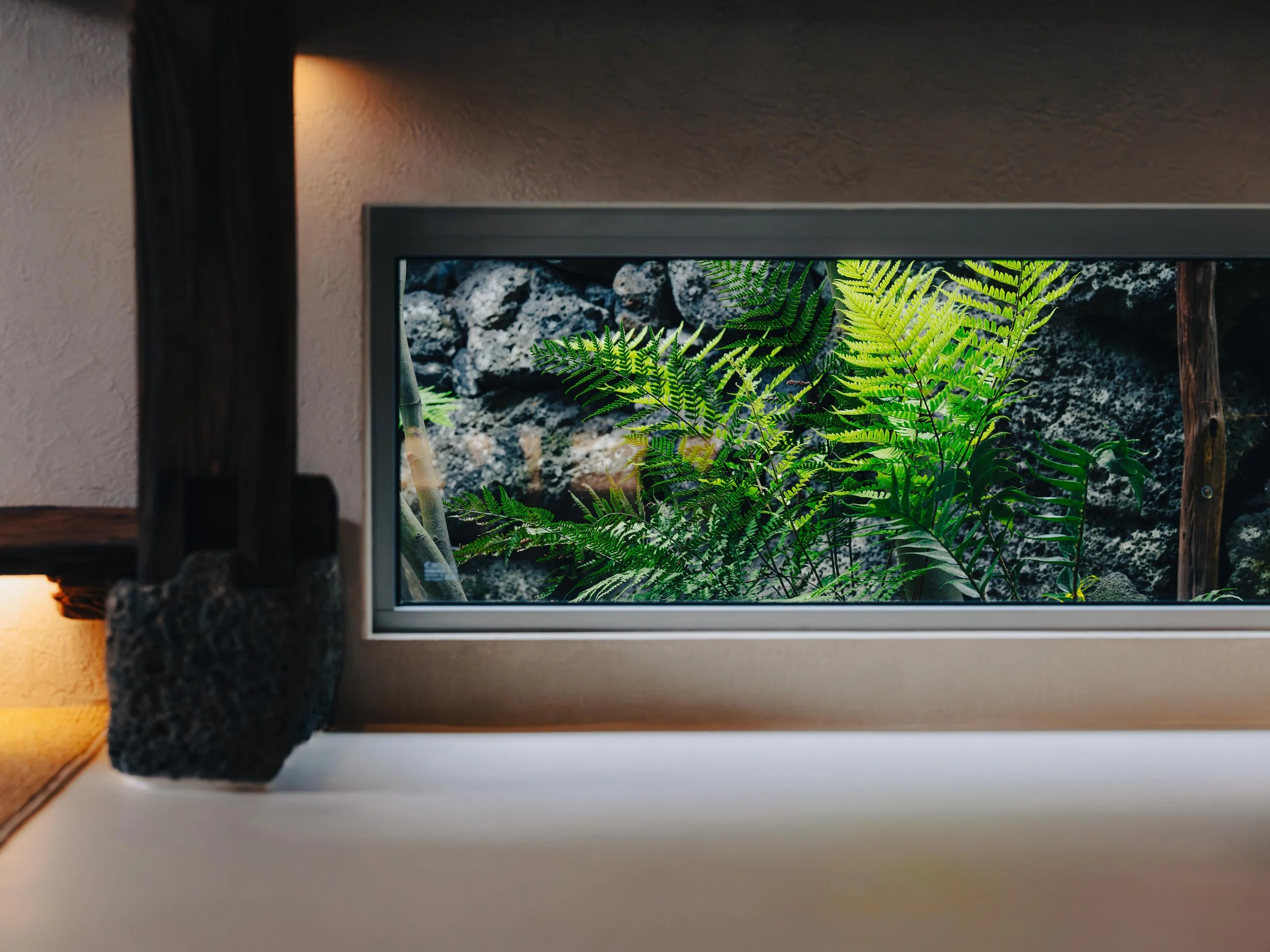
6. 식물이 눈에 띄기보다는, 어느 순간부터 자연스럽게 인식되는 느낌이 있는데요.
의도하신 부분인가요?
The plants do not immediately call attention to themselves, but at some point begin to register naturally as part of the space.
Was that intentional?
네. 의도한 부분입니다.
이 공간에는 이미 오랜 시간을 품은 식물들이 있었기 때문에, 그 식물을 주인공으로 두고 새롭게 들어가는 식물들은 조연처럼 역할을 조정했습니다.
식물의 높낮이와 밀도, 시선의 차단과 개방을 조율하면서 강약을 만들었습니다.
제주의 식물과 외지 수종이 어색하지 않게 섞이도록 균형을 맞춘 것도 중요한 부분이었습니다.
식물이 눈에 확 띄기보다, 어느 순간 공간의 일부로 느껴지길 바랐습니다.
Yes. That was intentional.
Because the space already contained plants that had held time within them for many years, I wanted those existing plants to remain the main characters, while the newly introduced ones played more of a supporting role.
I carefully adjusted the height and density of the planting, as well as the balance between visual enclosure and openness, in order to create the right rhythm and contrast.
Another important part of the process was making sure that Jeju-native plants and non-native species could coexist without feeling out of place.
Rather than making the plants immediately stand out, I hoped they would, at some point, simply come to be felt as part of the space itself.
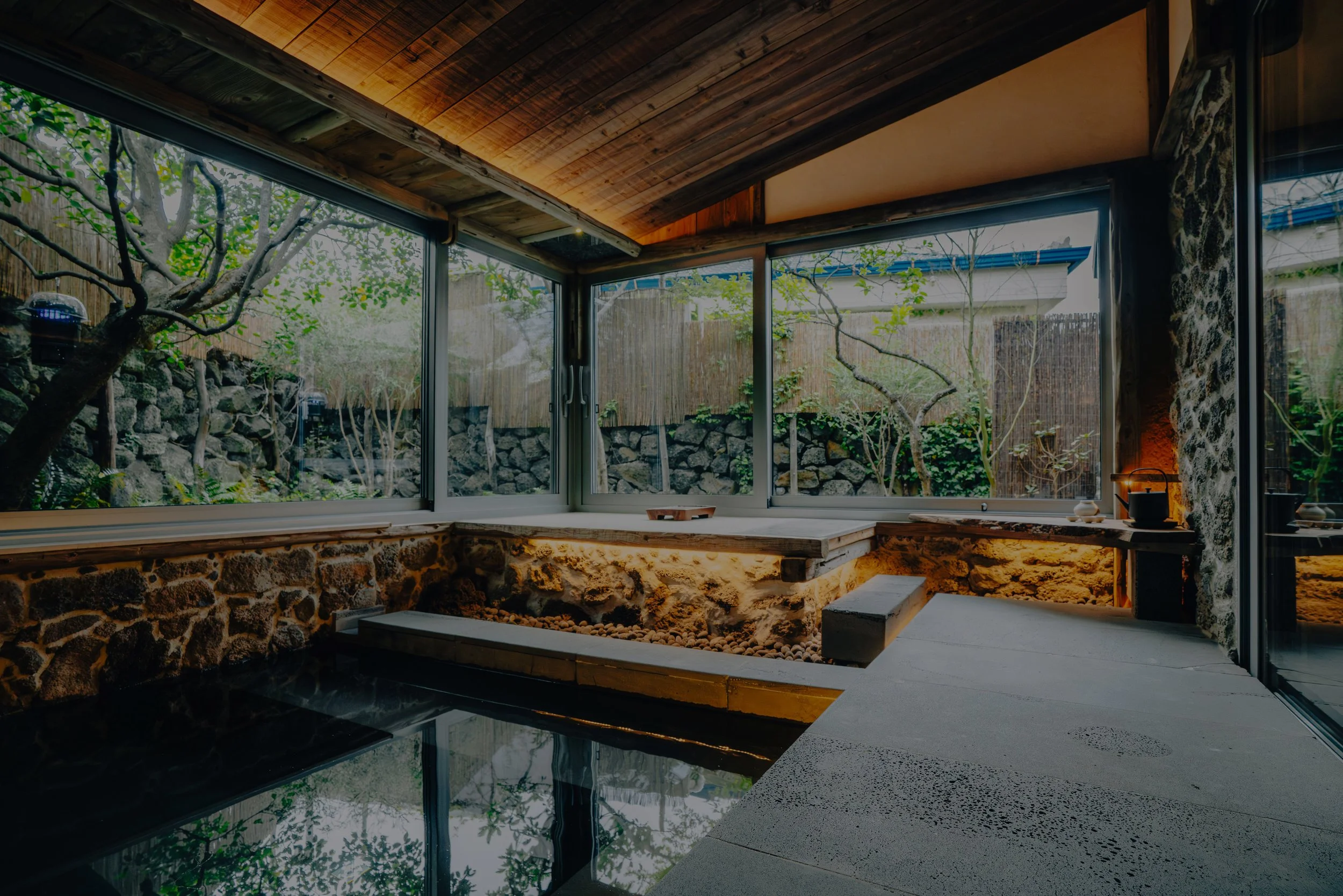
7. 눗에서는 자쿠지 경험이 중심이 되는데, 물과 식물이 함께 있을 때 사람의 감각은 어떻게 달라진다고 보시나요?
At NUUT, the jacuzzi experience is central.
When water and plants exist together, how do you think a person’s senses begin to change?
물과 식물이 함께 있으면 사람은 자연스럽게 자신을 낮추게 된다고 생각합니다.
특히 자쿠지처럼 맨몸 혹은 최소한의 옷가지만 걸친 채로 물에 잠기는 경험에서는, 사람이 공간의 주인공이라기보다 자연의 일부가 되는 느낌을 받을 수 있습니다.
물의 온도, 바람, 식물의 움직임이 함께 느껴질 때 감각은 더 섬세해지고, 자연 앞에서 조금 더 겸손해지는 순간이 생긴다고 봅니다.
When water and plants are experienced together, I believe people naturally become a little more humble in relation to their surroundings.
Especially in an experience like a jacuzzi — where one is immersed in water either bare or with only the lightest layer of clothing — there can be a shift in which the person no longer feels like the main character of the space, but rather a part of nature itself.
When the warmth of the water, the wind, and the movement of the plants are all felt together, the senses become more delicate and finely attuned, and a moment arises in which one becomes a little more humble before nature.
8. 이 공간에서 식물은 ‘보는 대상’이라기보다 ‘감각을 낮추는 장치’처럼 느껴지기도 합니다.
이런 방향을 의도하신 건지 궁금합니다.
In this space, the plants feel less like something to be looked at and more like a device that gently lowers the senses.
Was that direction intentional?
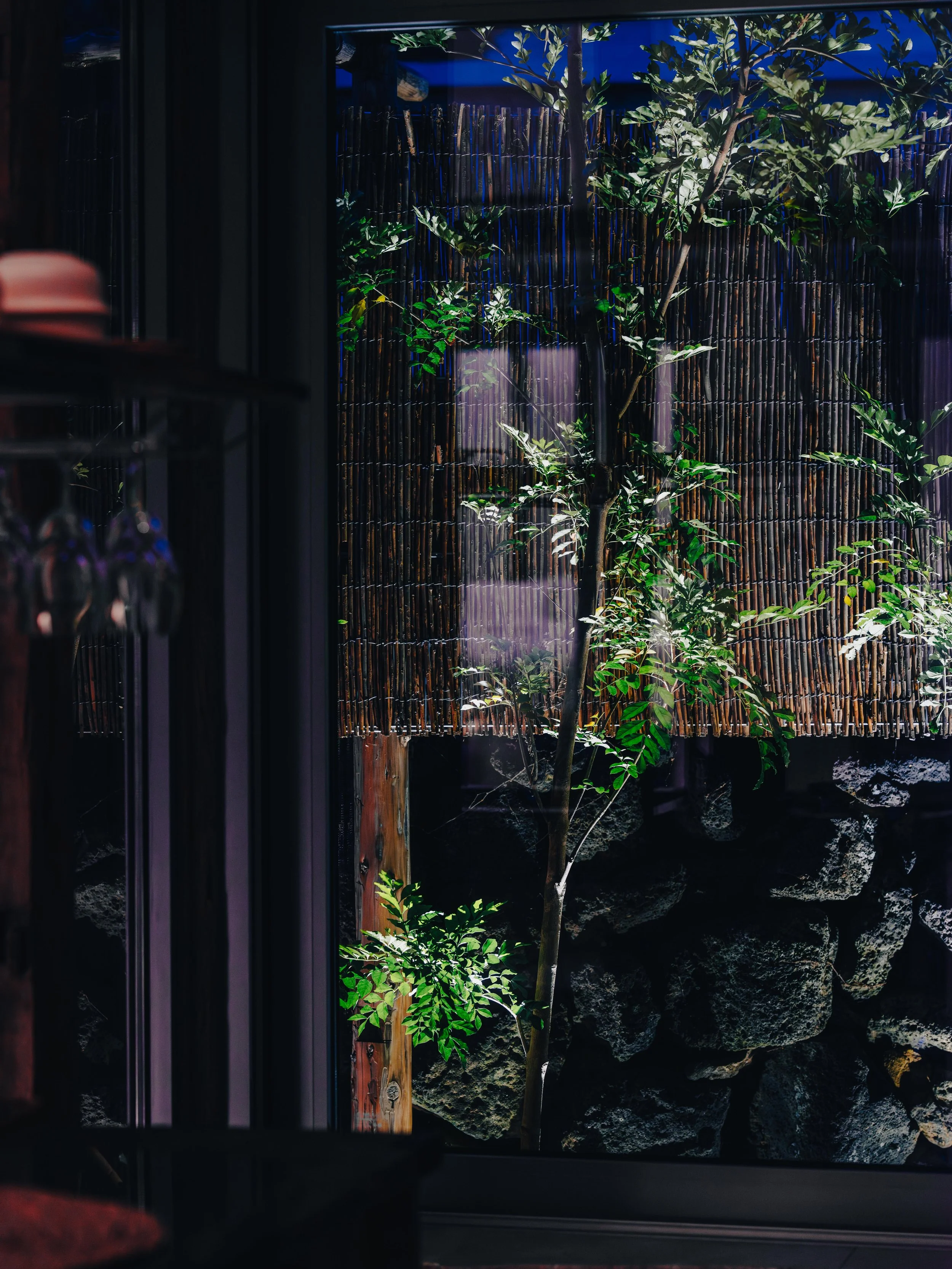
네. 눗 애월의 식물 연출은 자극적이거나 경쟁적인 방식이 아니라, 편안함과 안정감을 주는 방향이어야 한다고 생각했습니다.
자연스럽다는 말은 사람마다 다르게 느낄 수 있습니다.
누군가에게는 느린 시간이고, 누군가에게는 포근함이며, 또 누군가에게는 위로일 수 있습니다.
틸테이블이 좋아하는 연출은 자연의 한 부분을 조심스럽게 옮겨온 것처럼 보이는 방식입니다.
눈에 띄지 않지만 존재감은 있고, 과하지 않지만 분명한 힘이 있는 식물의 상태를 만들고 싶었습니다.
이건 우리의 의도라기보다는 당연히 그래야 하는 본질입니다.
Yes. I believed the planting at NUUT Aewol needed to move away from anything overstated or competitive, and instead create a sense of comfort and stability.
What feels natural can differ from person to person.
For some, it may feel like a slower sense of time; for others, a feeling of warmth; and for someone else, a form of quiet consolation.
The kind of composition teal table values is one that feels as though a fragment of nature has been carefully brought into the space.
I wanted to create a condition in which the plants do not immediately stand out, yet still carry a quiet presence — not excessive, but clearly powerful.
This is less a matter of intention for us than a matter of essence.
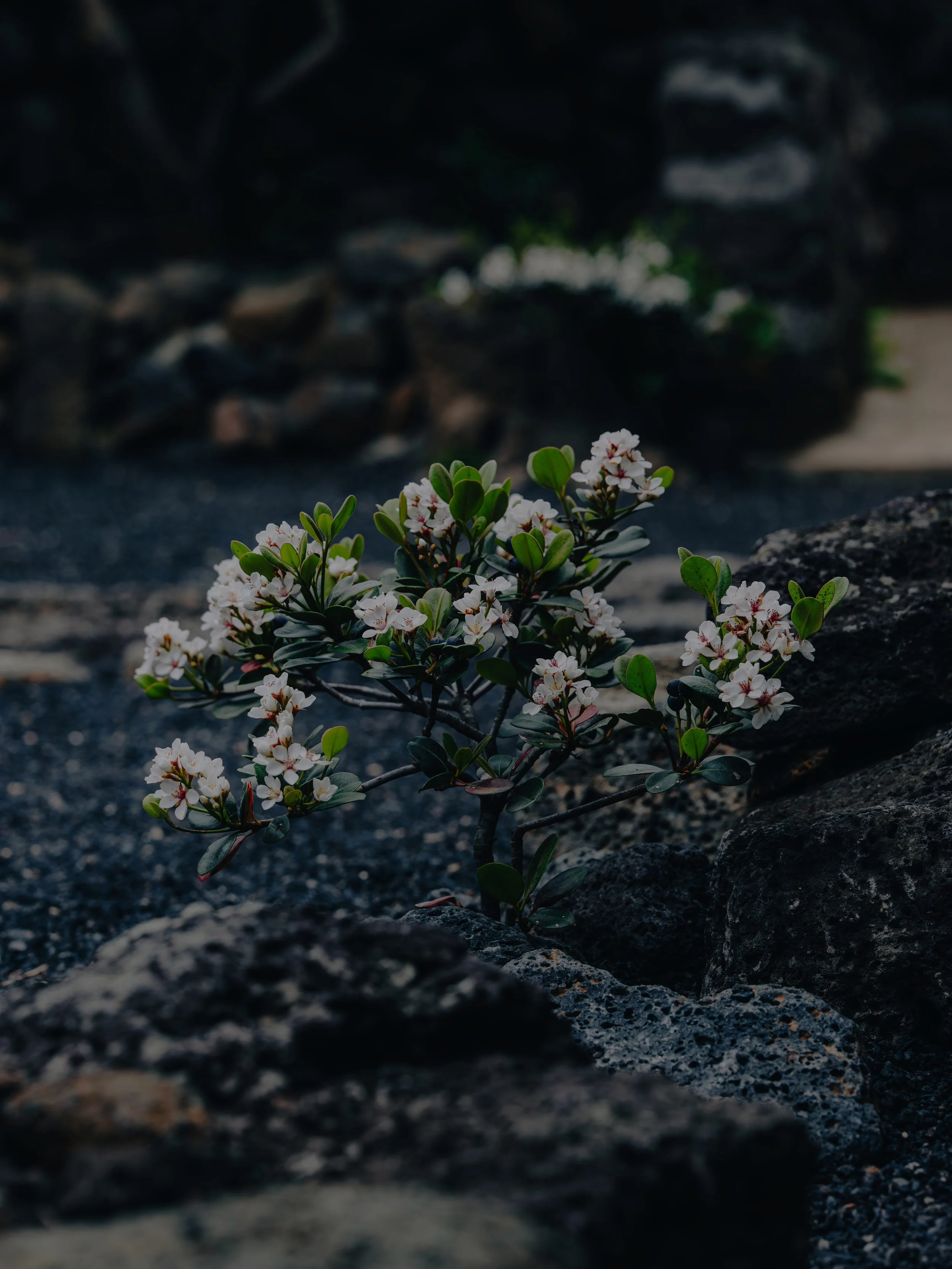
9. 눗은 돌, 나무, 물, 흙, 그리고 ‘숨’이라는 재료로 구성되어 있는데,
식물은 이 안에서 어떤 역할을 한다고 보셨나요?
NUUT is composed of stone, wood, water, earth, and “breath” as its materials.
Within that framework, what role did you feel plants were meant to play?
식물의 역할은 ‘숨’이라고 생각이 듭니다.
눗 애월은 기존에 있던 것들을 최대한 살리고, 공사 과정에서 나온 돌이나 주변의 재료를 다시 활용해 현대적으로 재해석한 공간이라고 느꼈습니다.
식물 역시 같은 방향으로 접근했습니다.
기존 식물을 없애고 새롭게 만드는 것이 아니라, 이미 그곳에 있던 생명과 시간을 살려내는 것이 중요했습니다.
그런 의미에서 식물은 이 공간 안에서 ‘숨’ 같은 역할을 한다고 생각합니다.
공간에 생기를 불어넣고, 머무는 사람에게 자연의 호흡을 느끼게 하는 존재입니다.
I would say the role of plants is that of breath.
NUUT Aewol felt to me like a space that preserves as much of what was already there as possible, while reinterpreting it in a contemporary way through the reuse of stones and other materials uncovered in the course of construction.
I approached the planting in much the same way.
Rather than removing what already existed and creating something entirely new, it felt important to preserve and revive the life and time that were already present there.
In that sense, I believe plants serve as breath within this space.
They breathe life into it, and allow those who stay there to feel the breath of nature.
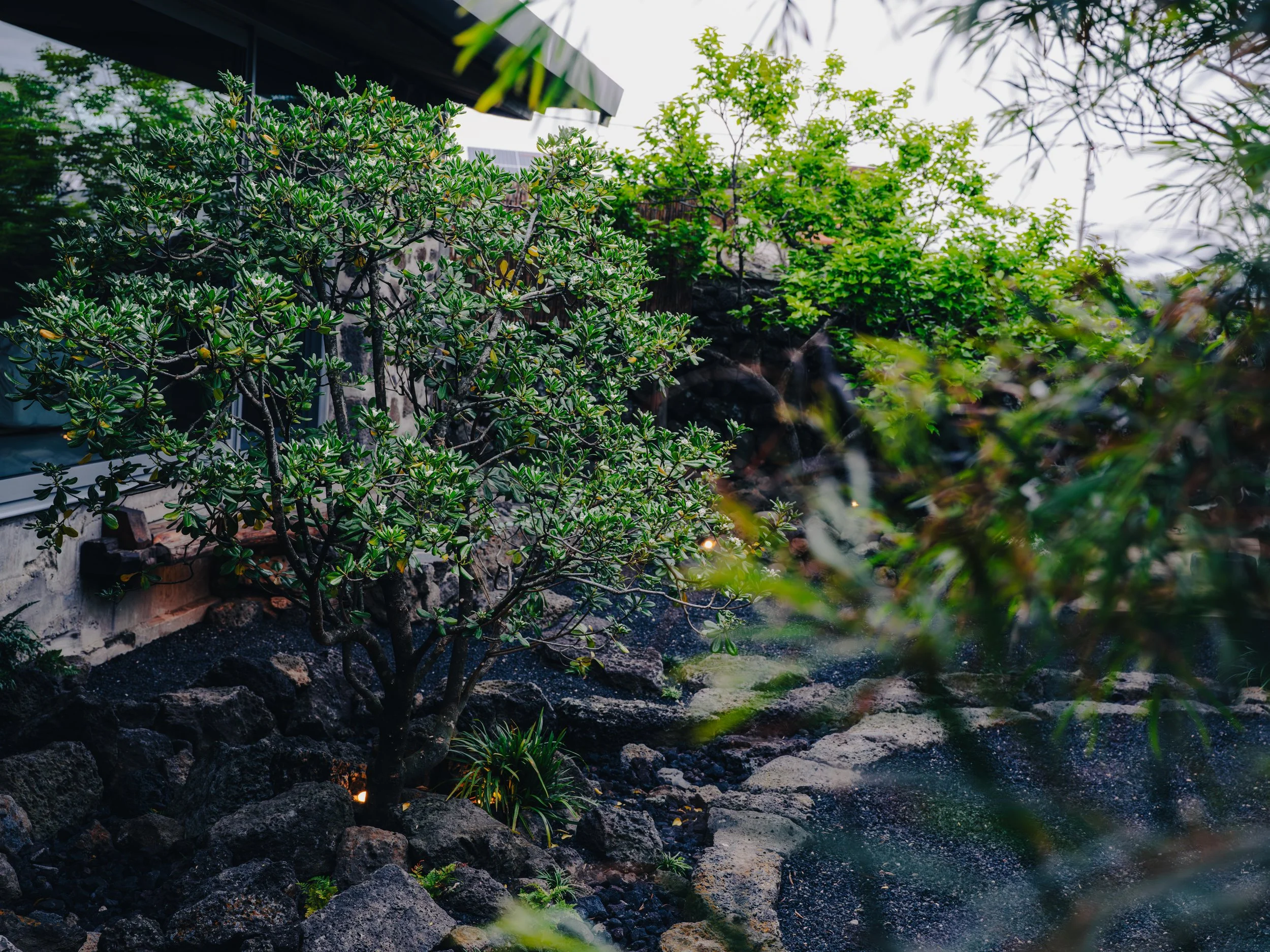
10. 특히 제주라는 환경에서 식물을 선택할 때 중요하게 본 기준이 있다면 무엇인가요?
When selecting plants for a space in Jeju in particular, what criteria mattered most to you?
가장 중요하게 본 기준은 ‘제주다움’이었습니다.
제주 식물이라고 하면 흔히 야자나무를 떠올리지만, 야자나무는 제주 고유의 식물이라기보다 따뜻한 기후 때문에 살 수 있는 외래식물입니다.
저희는 “원래 제주의 풍경에는 어떤 식물들이 있었을까?”라는 질문에서 출발했습니다.
그래서 제주 토종 식물을 중심에 두고, 눗 애월의 옛것을 재해석하는 콘셉트와 어울릴 수 있는 외지 수종을 조심스럽게 더했습니다.
The most important criterion was a distinctly Jeju quality.
When people think of plants in Jeju, they often immediately picture palm trees. But palm trees are not truly native to Jeju; they are simply non-native plants that are able to survive there because of the island’s mild climate.
We began instead with a different question: What plants originally belonged to the landscape of Jeju?
From that starting point, we placed Jeju’s native plant species at the center, and then carefully introduced non-native species that could still harmonize with NUUT Aewol’s concept of reinterpreting what is old in a contemporary way.
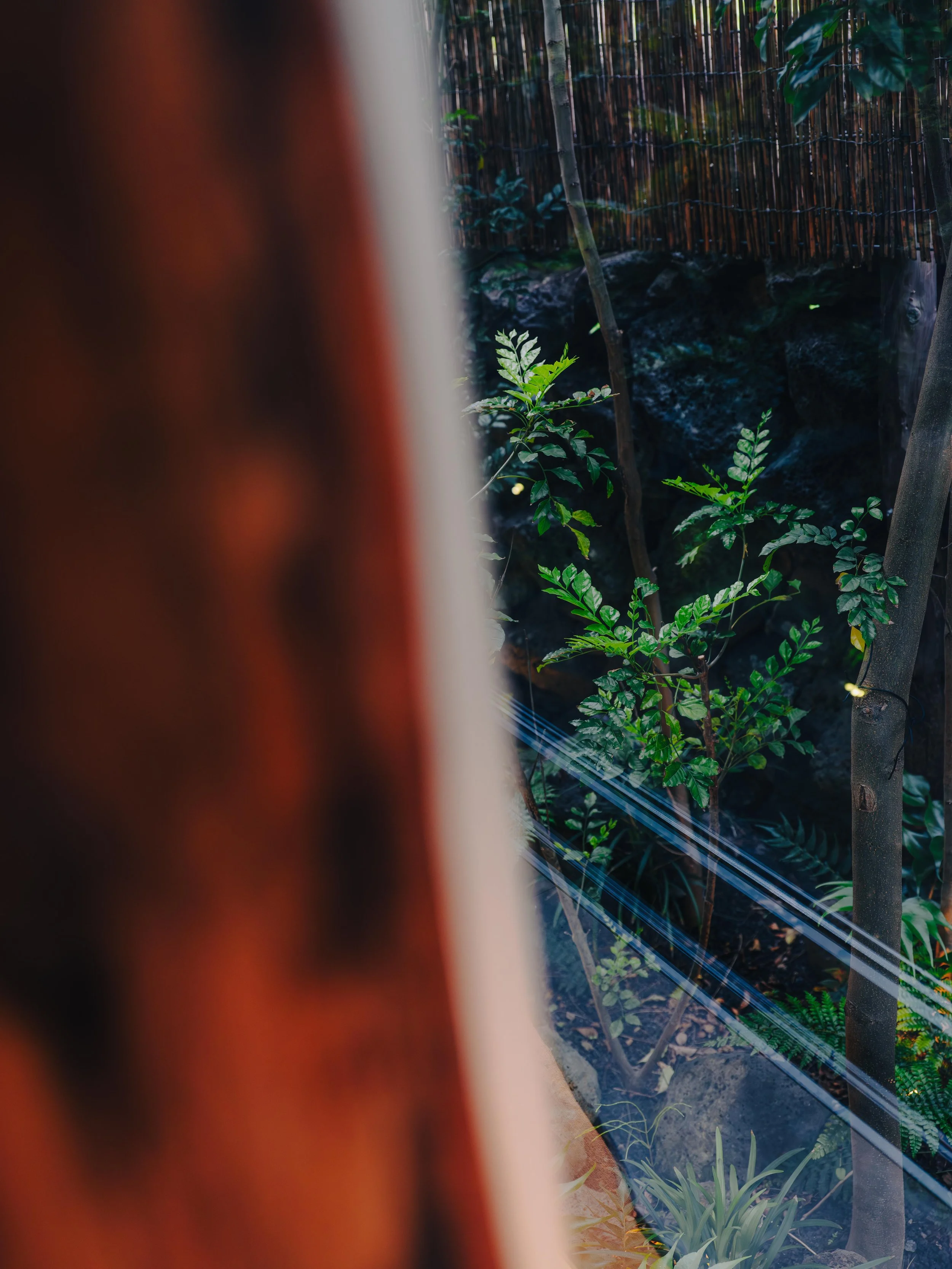
11. 이번 작업에서 사용된 식물들은 어떤 기준으로 선택되었나요?
단순한 환경 적합성 외에 감각적인 기준도 있었는지 궁금합니다.
What criteria were used in selecting the plants for this project?
Beyond environmental suitability, I’m curious whether there were also more sensory considerations.
식물은 한 가지 기준만으로 고를 수 없습니다.
공간의 환경에 잘 적응할 수 있는지, 토양 조건에 맞는지, 건강한 개체인지, 그리고 공간의 분위기와 수형이 어울리는지까지 함께 봐야 합니다.
예쁜 식물만으로는 좋은 조경을 만들 수 없습니다.
우리와 함께 살아갈 수 있는 식물이어야 하고, 시간이 지나도 공간과 어울려야 합니다.
그래서 식물을 고르는 과정은 가장 어렵고, 동시에 가장 많은 시간이 필요한 과정입니다.
Plants cannot be chosen according to a single criterion.
You have to consider all of it together: whether the plant can truly adapt to the conditions of the space, whether it suits the soil, whether it is healthy, and whether its overall character and form are in harmony with the atmosphere of the space.
A good landscape cannot be made with beautiful plants alone.
The plants must be able to live alongside us, and they must continue to belong to the space as time passes.
That is why the process of choosing plants is the most difficult one, and at the same time, the one that requires the greatest amount of time.
12. 그중에서도 눗 애월을 가장 잘 보여주는 식물 한 가지를 꼽는다면 무엇인가요?
그리고 그 이유는 무엇인가요?
If you had to choose just one plant that best represents NUUT Aewol, what would it be — and why?
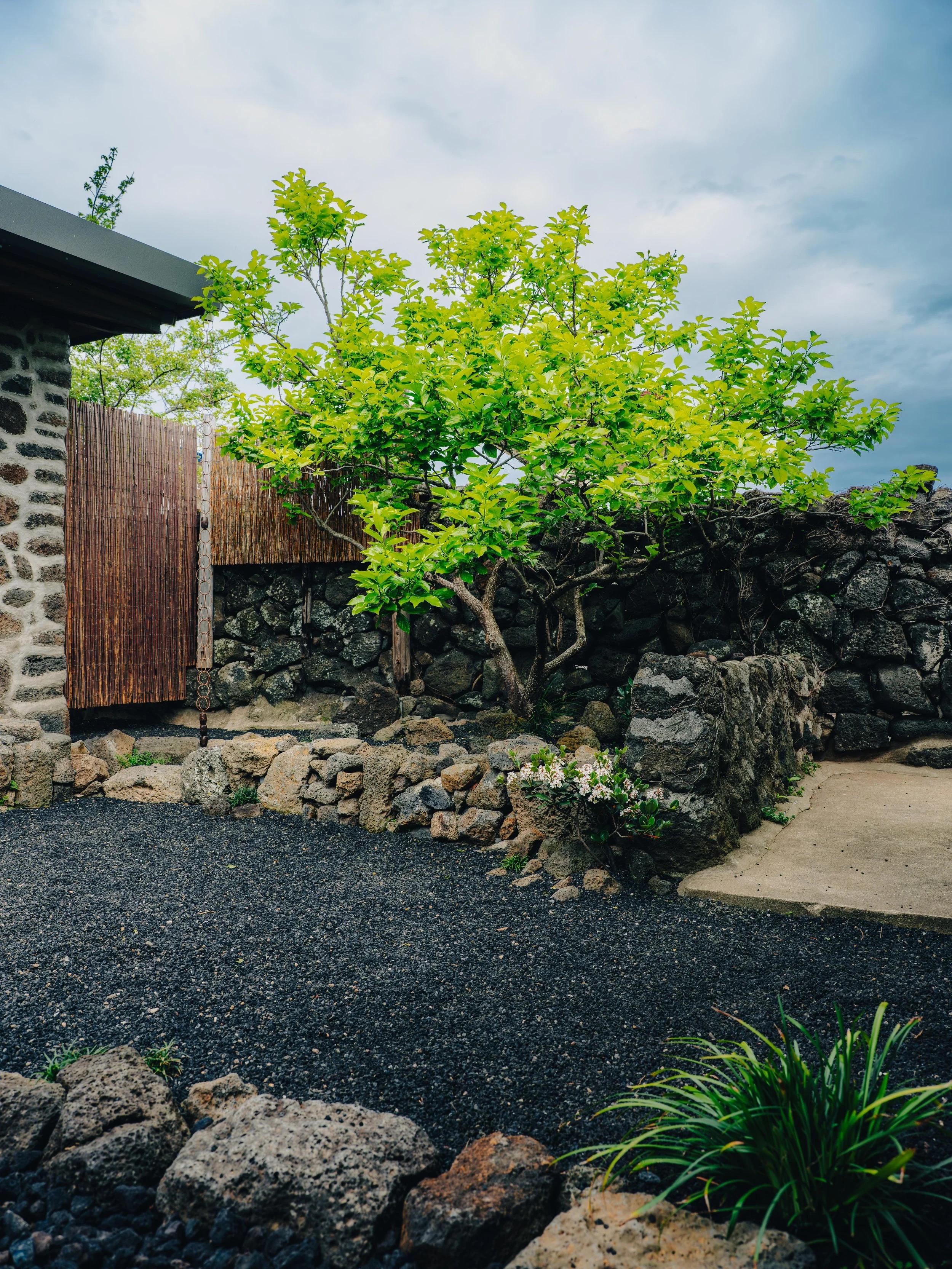
터줏대감인 감나무입니다.
처음 눗 애월을 봤을 때, 그 감나무에 강하게 매료되었습니다.
이 프로젝트를 꼭 하고 싶다고 느낄 정도였습니다.
100년 이상 된 나무가 가진 시간, 암석이 있는 뿌리 환경 때문에 느리게 자라며 만들어진 독특한 수형이 마치 큰 분재처럼 보였습니다.
쉽게 만날 수 없는 나무여서 3대가 덕을 쌓아야 만날 수 있는 나무가 아닌가 하는 생각까지 들었습니다.
전정과 수형 정리를 통해 이 공간의 상징적인 존재가 될 수 있다고 생각했습니다.
It would be the old persimmon tree, the quiet guardian of the site.
When I first saw NUUT Aewol, I was immediately captivated by that tree.
In fact, it moved me enough to feel that I absolutely wanted to be part of this project.
There was something extraordinary about it: the time held within a tree that has lived for well over a hundred years, and the distinctive form it had developed through slow growth in a root environment shaped by stone.
It almost resembled a large bonsai.
It was the kind of tree one does not encounter easily.
I even found myself thinking it was the sort of tree one might only come across after three generations of accumulated virtue.
Through careful pruning and form-shaping, I felt it could become one of the defining symbolic presences of this space.
13. 반대로 이번 작업에서 의도적으로 배제한 식물이나 요소가 있다면 무엇인가요?
Conversely, were there any plants or elements that you intentionally chose to exclude from this project?
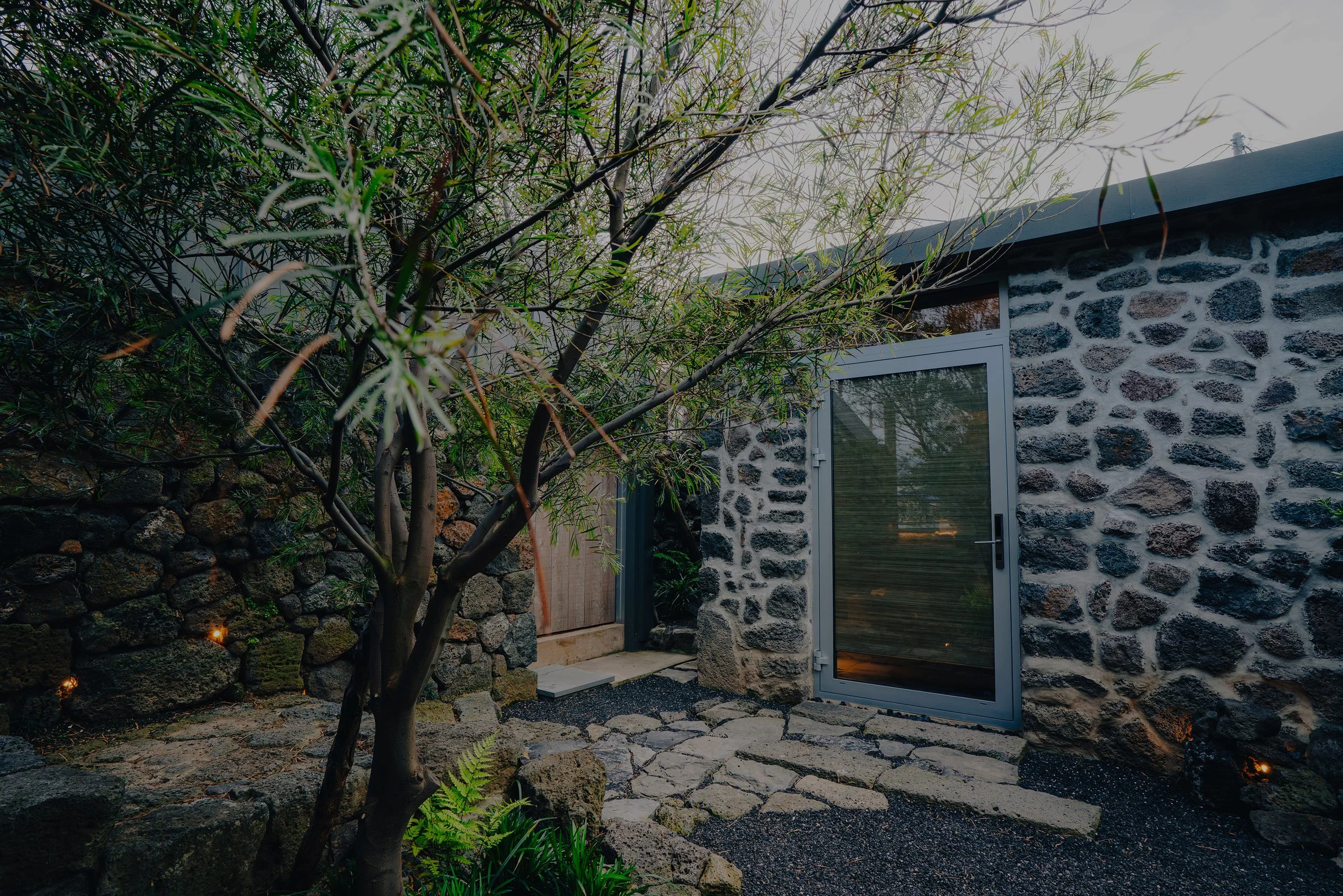
야자나무처럼 너무 이국적인 인상을 주는 식물은 배제했습니다.
제주는 기후적으로 이국적인 식물이 살기 좋은 환경이지만, 눗 애월의 콘셉트는 ‘옛’ 것을 최대한 살리고 재해석하는 데 있었습니다.
그래서 시각적으로 강한 이국성을 주는 식물보다는, 제주 고유의 정서와 공간의 시간성을 해치지 않는 식물을 중심으로 구성했습니다.
Yes. We intentionally excluded plants that create an overly exotic impression, such as palm trees.
Jeju’s climate certainly allows many exotic species to thrive, but the concept of NUUT Aewol was rooted in preserving and reinterpreting what is old as much as possible.
For that reason, we focused on plants that would not disrupt Jeju’s inherent sensibility or the sense of time embedded in the space, rather than species with a strong and conspicuously exotic presence.
14. 관리의 편의성보다 경험을 위해 선택한 요소가 있다면 소개해 주실 수 있을까요?
Were there any elements you chose for the sake of the experience, even if they were less convenient from a maintenance standpoint?
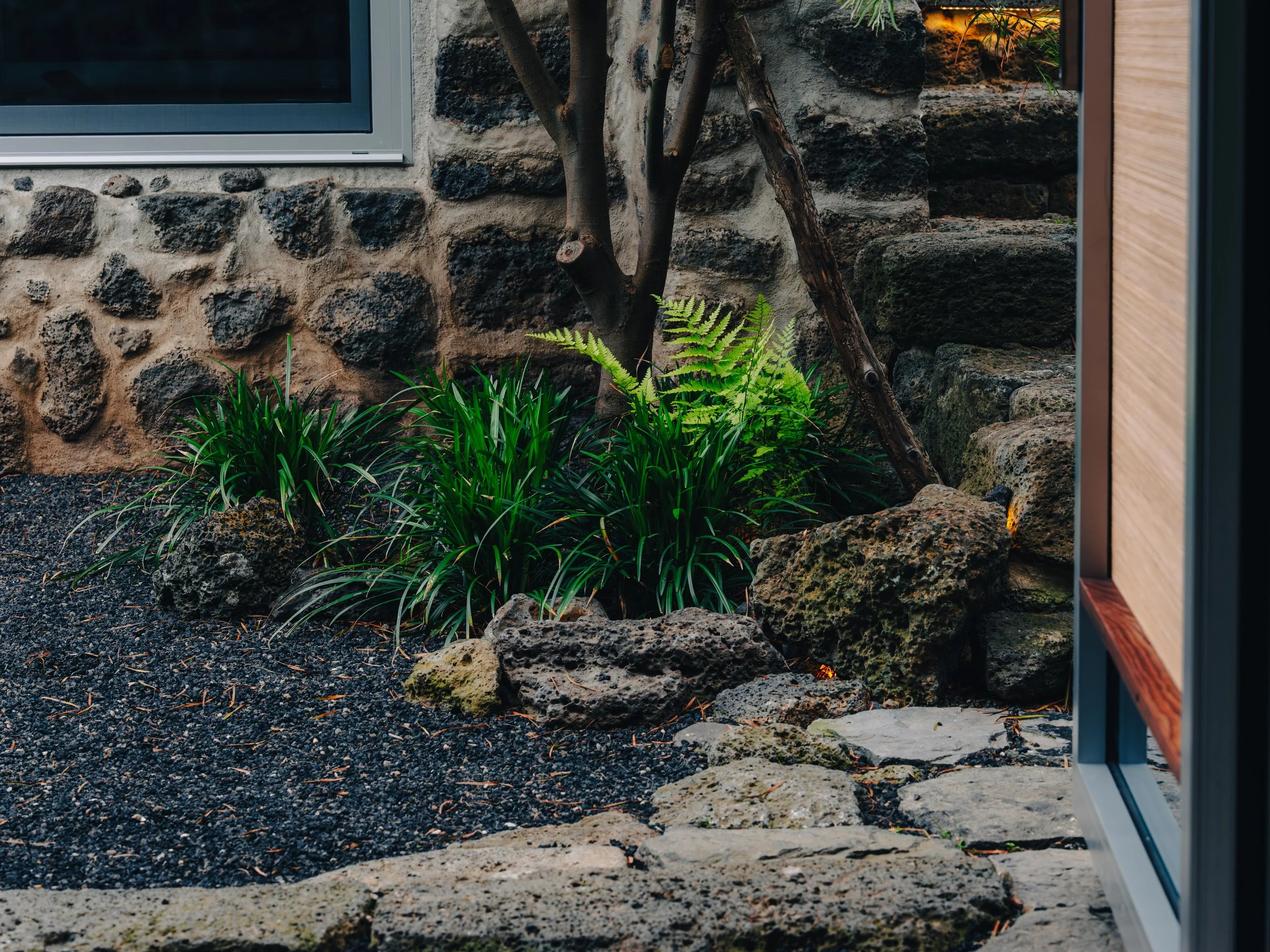
잎이 떨어지면 관리 측면에서는 손이 더 가지만, 계절을 느끼게 해준다는 점에서는 중요한 요소입니다.
늘 깔끔하게 유지되는 공간보다, 시간이 흐르고 계절이 바뀌는 것을 자연스럽게 느낄 수 있는 공간이 되길 바랐습니다.
낙엽은 불편함이기도 하지만, 동시에 이 공간의 감각을 만들어주는 장면이라고 생각합니다.
Yes — deciduous trees.
From a maintenance perspective, they certainly require more care once the leaves begin to fall. But in terms of the experience of the space, they are important because they allow people to feel the changing of the seasons.
Rather than creating a space that remains uniformly neat at all times, I hoped it would be a place where the passage of time and the turning of the seasons could be felt naturally.
Fallen leaves may be an inconvenience in practical terms, but I also see them as part of the scene that gives this space its particular sensibility.
15. 시간이 지나면서 더 좋아지는 공간이라는 인상이 있는데요.
식물 역시 그 변화까지 고려해서 설계하셨나요?
There is a sense that this is a space that will only grow better with time.
Did you design the planting with that future change in mind as well?
네.
조경은 완성된 순간보다 시간이 지난 뒤의 모습이 더 중요하다고 생각합니다.
식물은 계속 자라고 변하기 때문에, 처음부터 성장 이후의 밀도와 수형을 고려해야 합니다.
눗 애월 역시 지금의 장면뿐 아니라 몇 년 뒤 식물들이 공간에 더 깊이 자리 잡았을 때의 모습을 생각하며 설계했습니다.
Yes.
In landscaping, I believe what matters more than the moment of completion is how the space will look and feel as time passes.
Plants continue to grow and change, so from the very beginning, you have to consider the density they will eventually create and the form they will grow into.
NUUT Aewol was designed not only for the scene it presents now, but also with the image of the space several years from now in mind — when the plants will have settled more deeply into their place.
16. 계절이나 시간대에 따라 다르게 느껴지는 장면이 있다면 어떤 부분인가요?
Are there any scenes within the space that feel different depending on the season or the time of day?
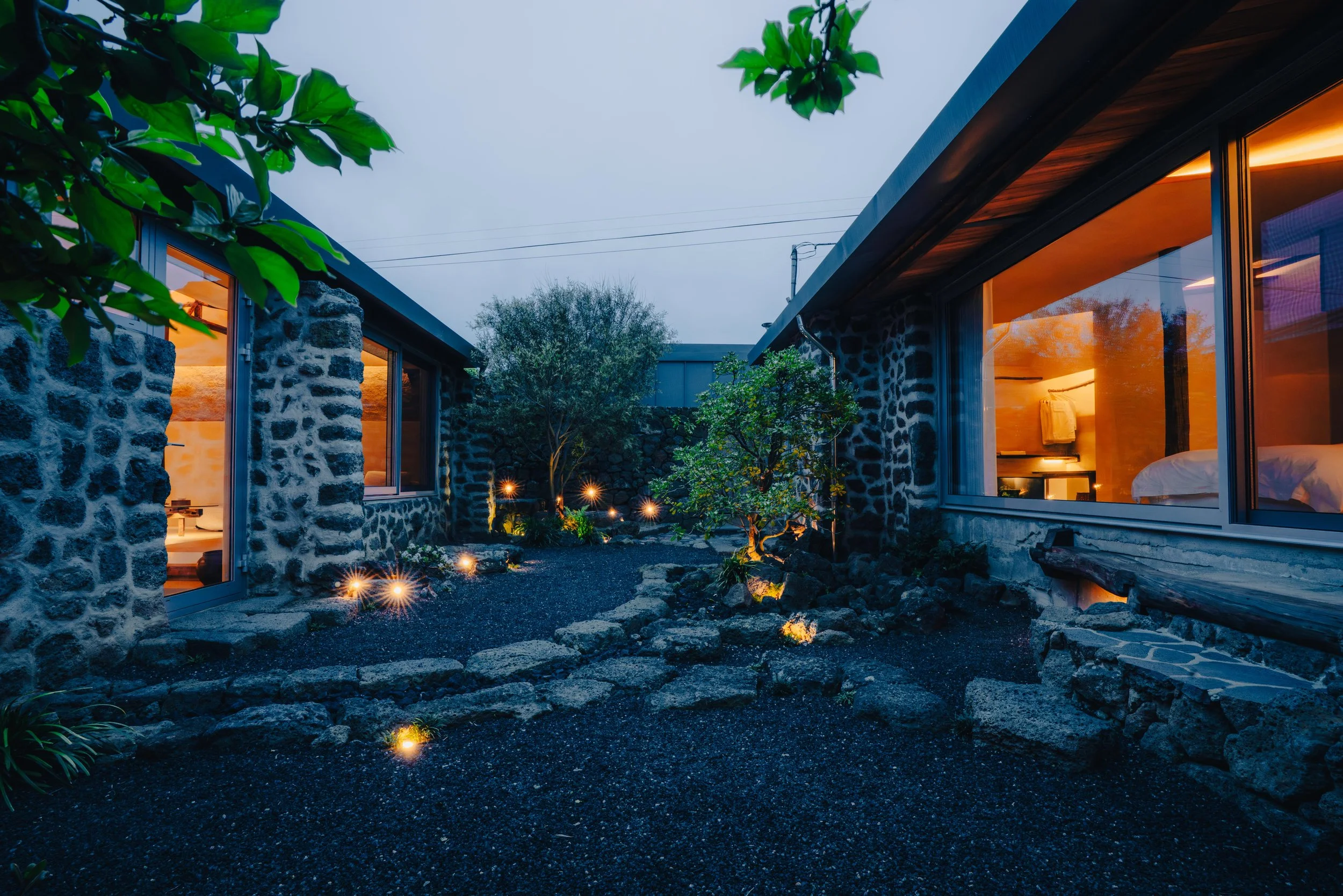
눗 애월에는 상록수와 낙엽수가 적절히 섞여 있습니다.
그래서 겨울에도 푸른 잎이 남아 있고, 계절이 바뀔 때는 잎의 색과 밀도, 빛의 느낌이 달라집니다.
아침에는 식물 사이로 들어오는 빛이 부드럽게 느껴지고, 바람이 부는 시간에는 잎의 움직임과 소리가 공간의 분위기를 바꿉니다.
계절과 시간에 따라 조금씩 다른 장면을 경험할 수 있도록 구성했습니다.
NUUT Aewol is composed with a thoughtful balance of evergreen and deciduous trees.
Because of that, there are still green leaves present even in winter, while the changing seasons bring shifts in color, density, and the quality of light.
In the morning, the light entering through the plants feels especially soft. At windier hours, the movement of the leaves and the sounds they make begin to alter the atmosphere of the space.
The planting was arranged so that one could experience slightly different scenes as the seasons turn and the hours of the day pass.
17. 이 공간의 식물은 시간이 지나면서 어떻게 변화하길 기대하셨나요?
How did you hope the plants in this space would change over time?
이 공간에 맞게 천천히 자리 잡고 성장하길 기대했습니다.
다만 식물은 자연 그대로 두기만 하면 원하는 방향으로 자라지 않을 수 있기 때문에, 적절한 시기의 전정과 전지를 통해 수형과 밀도를 계속 조율해야 합니다.
시간이 지나면서 새로 심은 식물들도 원래 그 자리에 있었던 것처럼 느껴지고, 오래된 나무들과 자연스럽게 어우러지는 모습이 되길 바랍니다.
I hoped they would slowly settle into the space and grow in a way that feels true to it.
That said, plants do not always grow in the desired direction if they are simply left on their own.
Their form and density need to be continually adjusted through pruning and trimming at the right moments.
Over time, I hope the newly planted species will come to feel as though they had always belonged there, blending naturally with the older trees.
18. 실제로 이 공간을 사용하는 사람들이 식물을 통해 어떤 방식의 변화를 경험하길 기대하셨나요?
What kind of change did you hope people using this space might experience through the presence of plants?
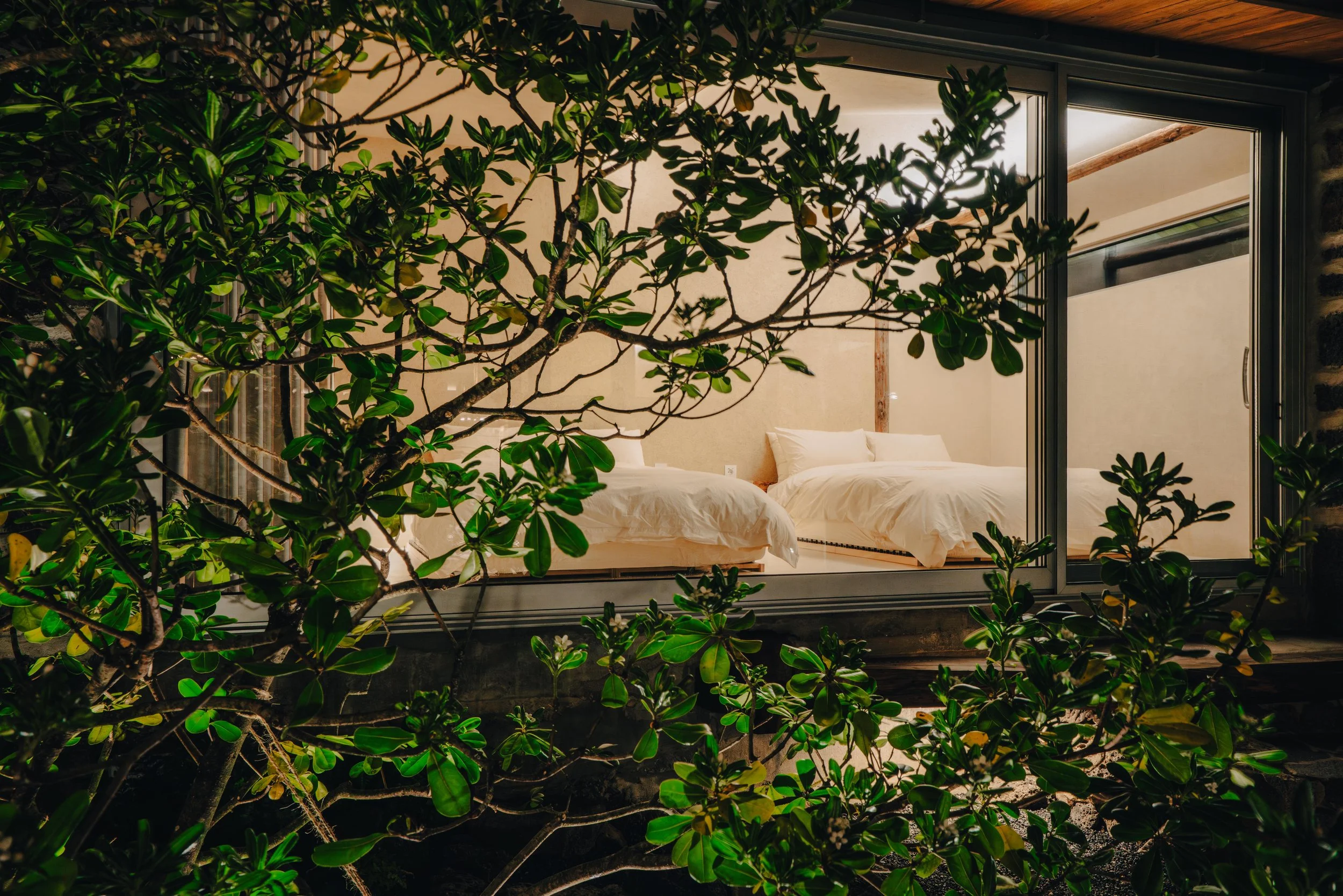
식물이 공간을 완성한다는 느낌을 받았으면 합니다.
식물은 단순히 장식으로 놓인 것이 아니라, 공간의 분위기와 감각을 마지막으로 정리해주는 존재라는 것을 느꼈으면 합니다.
그리고 가능하다면, “나도 식물을 한번 키워볼까?”라는 마음이 생기면 좋겠습니다.
식물이 있는 공간에서 머무른 경험이 일상의 작은 변화로 이어진다면 더 의미 있을 것 같습니다.
I hope they come away with the feeling that the plants are what complete the space.
The plants are not there simply as decoration, but as a presence that ultimately brings together the atmosphere and sensory balance of the space.
I hope that becomes something people can genuinely feel while they are there.
And if possible, I would love for the experience to leave them with a quiet thought: Maybe I should try growing a plant too.
If time spent in a space shaped by plants can lead to even a small change in everyday life, I think that would make the experience all the more meaningful.
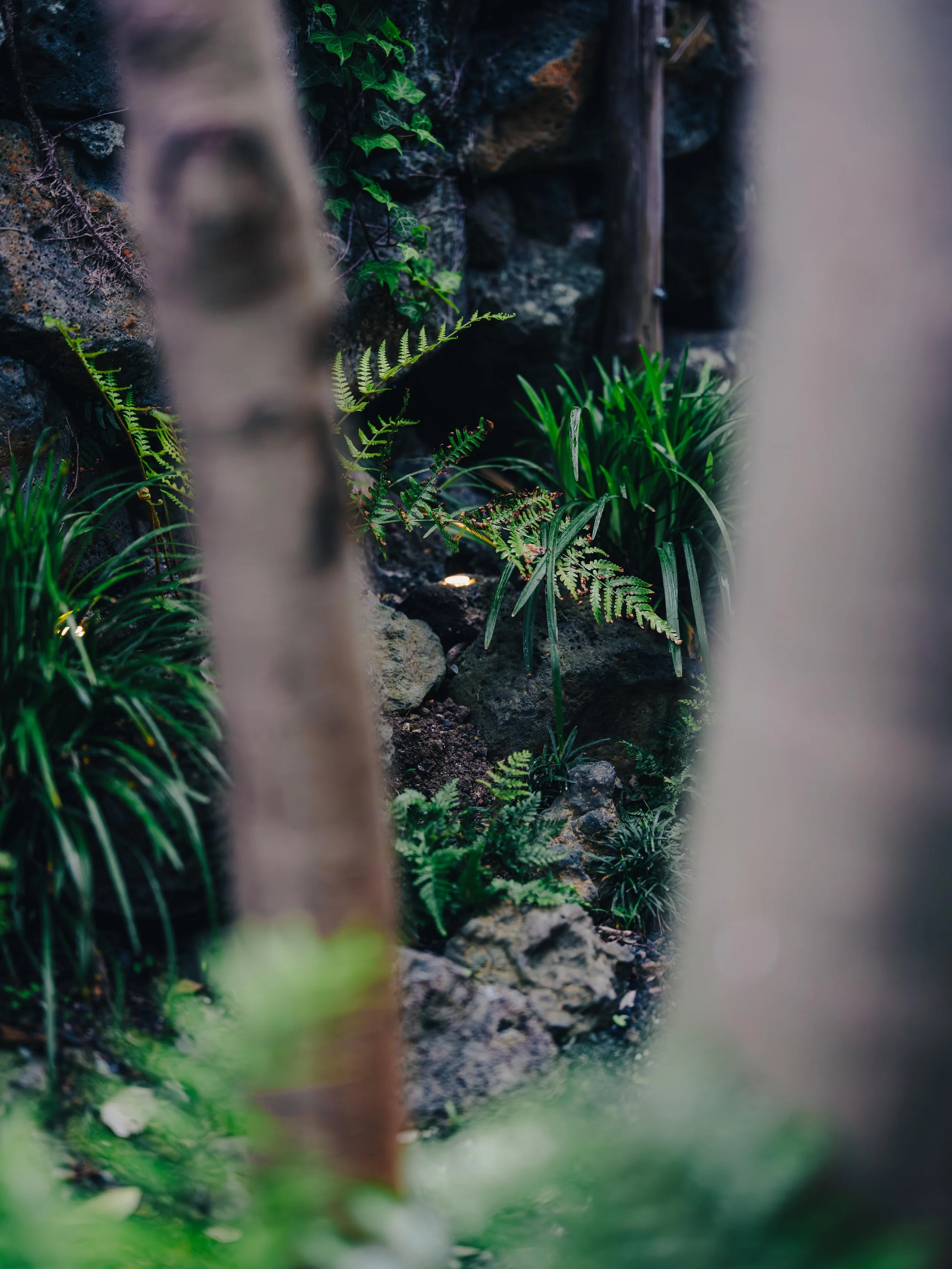
19. 틸테이블이 생각하는 눗 애월의 조경을 한 문장으로 표현한다면 어떻게 말할 수 있을까요?
If teal table were to describe the landscape of NUUT Aewol in a single sentence, how would you put it?
“애쓰지 않아도 좋은 곳, 자연이 머무는 쉼표.”
또는 조금 더 시적인 방향이라면,
“치열한 일상 너머, 자연의 숨이 머무는 곳.”
“A place that is good without effort — a pause where nature comes to rest.”
Or, in a slightly more poetic direction:
“Beyond the intensity of daily life, a place where the breath of nature lingers.”
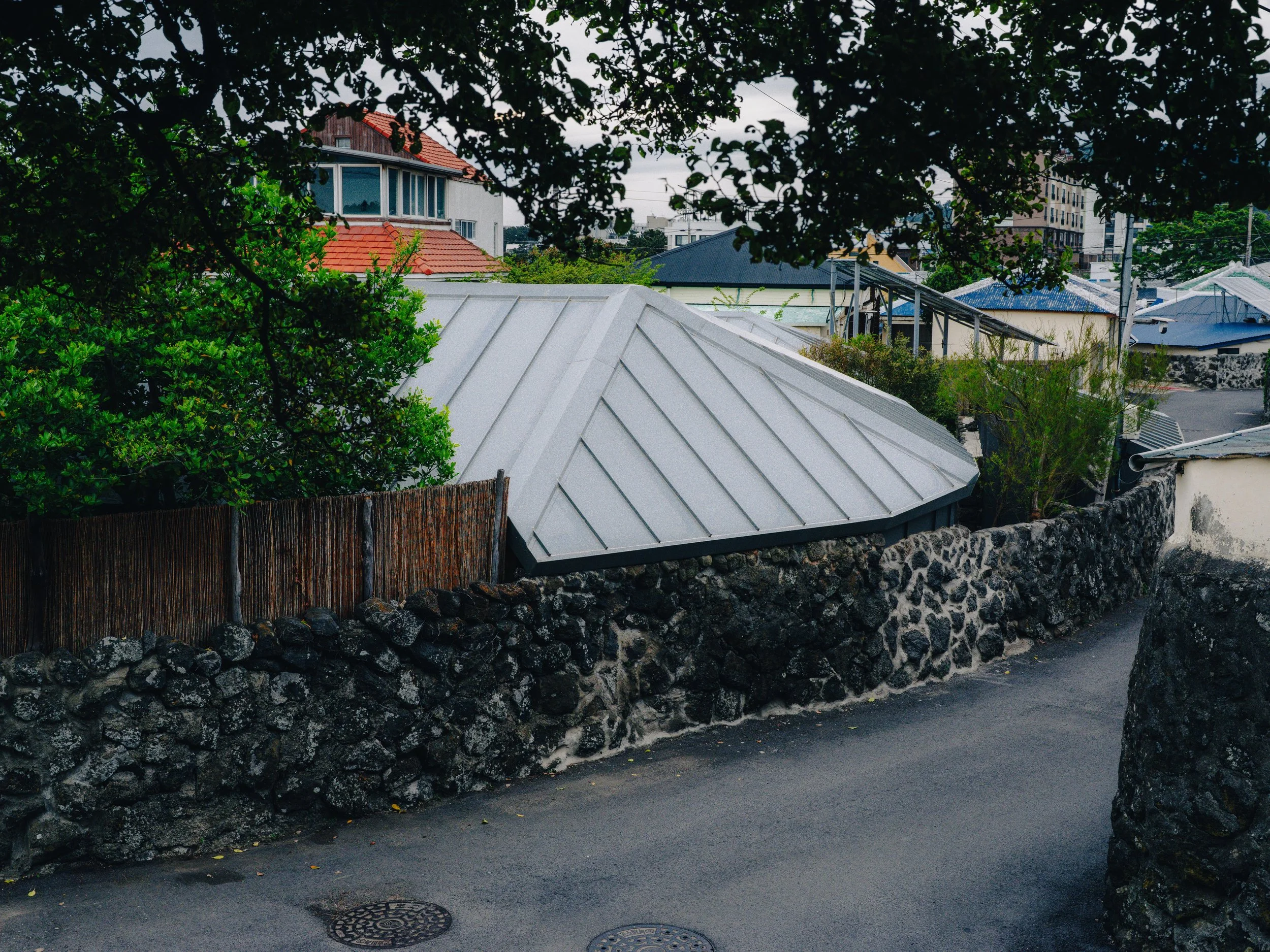
20. 이 공간을 떠난 사람들이 식물과 관련해 하나라도 기억하게 된다면, 어떤 감각이 남기를 바라시나요?
If there is just one thing people remember about the plants after leaving this space, what kind of feeling would you hope remains with them?
식물은 채우는 것만큼 비우는 것도 중요하다는 감각이 남았으면 합니다.
많이 심고 많이 보여주는 조경이 아니라, 필요한 만큼 덜어내고 남겨두었을 때 생기는 편안함을 느끼길 바랍니다.
그 공간에서 식물이 눈에 강하게 남기보다, 머무는 동안 몸이 조금 느려지고 마음이 편안해졌다는 감각으로 기억되면 좋겠습니다.
I hope what stays with them is the sense that, with plants, what is left empty matters just as much as what is filled.
Rather than a landscape that overwhelms by planting more and showing more, I hope they feel the comfort that comes from leaving only what is necessary and letting the rest remain open.
More than remembering the plants as something visually striking, I would rather they remember the space through a feeling: that while they were there, their body slowed a little, and their mind became more at ease.
“애쓰지 않아도 좋은 곳, 자연이 머무는 쉼표.”
“A place that is good without effort — a pause where nature comes to rest.”